

Thank you for Subscribing to Gov Business Review Weekly Brief

Dane County
Charles A. Tubbs, Director of Emergency Management
Prepared, Connected, Resilient: The New Face of Emergency Management
Charles A. Tubbs
Emergency management has undergone a profound transformation in response to the increasingly complex public safety challenges facing our communities today. Early in my career, emergency management was often centered on responding to isolated incidents, including severe weather, fires, floods, grants, equipment or localized emergencies. While those events still require urgent attention, today’s environment demands a far broader and more sophisticated approach.
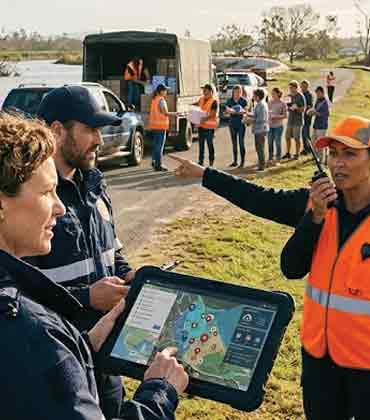
We are now navigating a reality where crises rarely occur in isolation. Communities face overlapping and interconnected threats—from extreme weather events and public health emergencies to cybersecurity risks, infrastructure disruptions, behavioral health challenges and growing societal instability. These issues are often simultaneous, fast-moving and deeply intertwined. As a result, emergency management can no longer operate in silos. Public safety is not the responsibility of any one agency, department or level of government alone. It requires a coordinated, whole-community approach built on partnership, trust and shared responsibility. Some of our strongest outcomes emerge when local government, healthcare systems, schools, law enforcement, nonprofit organizations, businesses and residents work together with a common purpose.Modern emergency management is about safeguarding lives, protecting property, preserving our environment and ensuring that even in the face of adversity, communities are positioned not simply to recover, but to move forward with strength and purpose.
The articles from these contributors are based on their personal expertise and viewpoints, and do not necessarily reflect the opinions of their employers or affiliated organizations.
