

Thank you for Subscribing to Gov Business Review Weekly Brief

City of Durango
Brice Current, Chief of Police
Technology With a Badge, Politics Without a Manual
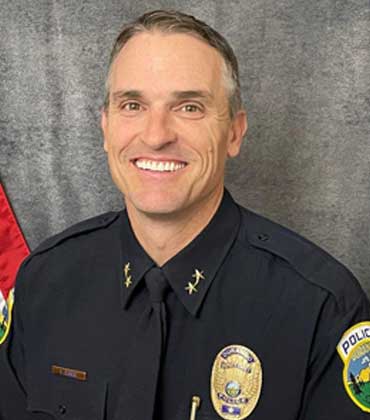
Brice Current
The first time a license-plate reader helped solve a violent felony, the lead came in minutes, not weeks. The community celebrated justice, but also voiced unease about who might be watching, who could gain access, and whether tools built for public safety could drift beyond their purpose. At community meetings, fears surfaced that ICE had access to ALPR data, which wasn’t true, but the concern itself was real. Today, debates about technology often hinge less on what it does than on what people fear it might become.
Since the adoption of body-worn cameras, law enforcement has undergone one of its most significant technological shifts. For generations, policing has adopted tools; body-worn cameras were the first to change behavior and increase accountability on both sides. Yet recently, the tools have advanced more quickly than contextualizing them. Political narratives, frequently driven by emotion and misunderstanding, now shape technology policies faster than evidence ever did. As technology and community concerns evolved, so did my vision as a Chief, which was shaped by experience. I quickly reawakened to a fundamental truth: policing isn’t about mechanisms; it’s about preventing harm. Technology changes the how, not the why. I returned to what had worked for more than 25 years in investigating crime: proactive, results-based policing based on actionable intelligence and decisive enforcement, not passive analytics. Outcomes, not data for its own sake, mattered most. Deterrence Through Certainty, Not Severity One of the best compliments I received as a police chief sounded like a criticism when a councilor said from the dais that she never heard much about the police department. To me, that silence meant success. The most important outcomes in policing are never measured because they never happen; crimes prevented, victims never created. When policing works, there’s no headline, no statistic, and no incident to explain, just a community that remains safe. Measurement is essential, but the realization of prevention changed how we measure success. Crime rates show what has already happened; clearance rates tell offenders what will happen. The difference isn’t academic; it’s behavioral. As the National Institute of Justice notes, “The certainty of being caught is a far more powerful deterrent than the severity of punishment.” Deterrence works when consequences feel inevitable, not abstract. The New York Times reached a similar conclusion when examining policing metrics, noting that “criminals tend to think in the short term, responding more to the likelihood of getting caught than to long-range punishment” (The New York Times, analysis of policing metrics). Focusing exclusively on crime totals is a trap. Offenders don’t study dashboards; they calculate immediate risk. And good investigators leverage technology to increase quick solvability. Used correctly, technology multiplies effectiveness and builds legitimacy.As a police chief, I’ve learned that occupying space in public safety carries unavoidable obligations to prevent crime, not merely respond to it.
The articles from these contributors are based on their personal expertise and viewpoints, and do not necessarily reflect the opinions of their employers or affiliated organizations.
